SUMMARY: The chapter "Microbes in Human Welfare" explores the various roles and applications of microbes in industries, agriculture, and environmental management. KEY TOPICS: Microbes in household products, industrial products, sewage treatment, biogas production, bio-control agents, bio-fertilizers, antibiotics, fermentation, microbial enzymes, probiotics.
Statement 2: They consume the major part of organic matter in sewage.
Show answerHide answer
Correct answer: Option 1 —
Both statements are true.
Q241 Mark
Statement 1: Mycorrhiza is a symbiotic association of fungi and plant roots.
Statement 2: It enhances absorption of phosphorus from soil.
Show answerHide answer
Correct answer: Option 1 —
Both statements are true.
Q251 Mark
Statement 1: Rhizobium is a nitrogen-fixing bacterium.
Statement 2: It lives symbiotically in nodules of legume roots.
Show answerHide answer
Correct answer: Option 1 —
Both statements are true.
Q261 Mark
Statement 1: Bt cotton is genetically engineered to produce insecticidal protein.
Statement 2: The Bt gene is from Bacillus thuringiensis.
Show answerHide answer
Correct answer: Option 1 —
Both statements are true.
Case Study / Passage Questions4 questions
Q273 Marks
A homemaker boils milk lets it cool to about 40 degrees C and then adds a small spoon of curd as starter. Over a few hours the milk thickens into curd. The teacher explains that lactic acid bacteria in the starter ferment lactose to lactic acid which lowers the pH and coagulates the milk proteins.
Curd formation is mediated by:
AStreptococcus
BLactobacillus
CSaccharomyces
DAspergillus
The acid produced during curd formation is:
ALactic acid
BAcetic acid
CCitric acid
DPropionic acid
Discuss the role of microbes in industrial production of food, beverages and medicines.
Show answersHide answers
1. Option 2 — Lactobacillus
2. Option 1 — Lactic acid
3. Lactic acid bacteria such as Lactobacillus convert lactose in milk to lactic acid which lowers the pH and coagulates milk proteins. The fermentation also enriches the curd with vitamin B12 and adds a tangy flavour. Other industrial uses of microbes include yeast (Saccharomyces) for baking and brewing, Aspergillus niger for citric acid, Streptokinase for clot busting and Trichoderma for cyclosporin A.
Q283 Marks
A municipal corporation operates a sewage treatment plant in two stages. Primary treatment is a physical process of sedimentation. Secondary treatment uses aerobic microbes in aeration tanks to break down organic matter forming flocs of activated sludge. The treated water is finally released into a river.
The microbes in the aeration tank are mainly:
AAnaerobic
BAerobic
CPhotosynthetic
DChemosynthetic
The flocs that consume organic matter are called:
AActivated sludge
BMethanogens
CAlgae
DCyanobacteria
Describe the steps involved in sewage treatment and the role of microbes at each stage.
Show answersHide answers
1. Option 2 — Aerobic
2. Option 1 — Activated sludge
3. Sewage treatment uses microorganisms in two main stages. Primary treatment is physical — sedimentation removes coarse particles. Secondary treatment is biological — aerobic microbes in aeration tanks decompose organic matter forming flocs of activated sludge that settle out. A small portion of the sludge is recycled to inoculate fresh sewage. The remaining sludge is digested anaerobically by methanogens to produce biogas.
Q293 Marks
Microbes play a crucial role in the production of various household products. For instance, lactic acid bacteria are used in the fermentation of dairy products such as yogurt and cheese. These microbes not only help in preserving the food but also enhance its nutritional value by producing vitamins. Additionally, certain bacteria are used in the production of vinegar through the fermentation of ethanol. This process not only adds flavor but also acts as a natural preservative. Furthermore, enzymes produced by microbes are utilized in detergents to break down stains and enhance cleaning efficiency. Overall, the use of microbes in household products significantly contributes to food safety and quality.
What type of bacteria is commonly used in the fermentation of yogurt?
AE. coli
BLactobacillus
CStaphylococcus
DBacillus
Explain how microbes enhance the nutritional value of fermented dairy products.
Which process do microbes use to produce vinegar?
AFermentation of sugars
BFermentation of ethanol
CPhotosynthesis
DRespiration
Show answersHide answers
1. Option 2 — Lactobacillus
2. Microbes produce vitamins and improve digestibility.
3. Option 2 — Fermentation of ethanol
Q303 Marks
In agriculture, microbes are utilized as bio-fertilizers and bio-control agents to enhance crop productivity and protect plants from pests. Bio-fertilizers, such as Rhizobium, form symbiotic relationships with leguminous plants, fixing atmospheric nitrogen into a form that plants can use. This reduces the need for chemical fertilizers, promoting sustainable farming practices. On the other hand, bio-control agents like Trichoderma help in controlling plant diseases by outcompeting harmful pathogens. The use of these microbes not only increases crop yield but also minimizes the environmental impact of chemical inputs.
What is the role of Rhizobium in agriculture?
APest control
BNitrogen fixation
CSoil erosion prevention
DWater retention
Discuss the advantages of using bio-control agents in agriculture.
How do bio-fertilizers contribute to sustainable farming?
ABy increasing soil acidity
BBy fixing nitrogen
CBy enhancing soil salinity
DBy depleting nutrients
Show answersHide answers
1. Option 2 — Nitrogen fixation
2. They reduce chemical pesticide use and promote ecological balance.
3. Option 2 — By fixing nitrogen
Table-Based Questions4 questions
Q313 Marks
Study the table on important microbial products:
Product
Microbe
Use
Penicillin
Penicillium notatum
Antibiotic
Citric acid
Aspergillus niger
Food and beverage
Streptokinase
Streptococcus
Clot buster
Cyclosporin A
Trichoderma polysporum
Immunosuppressant
Statin
Monascus purpureus
Lower blood cholesterol
Cyclosporin A is produced by:
APenicillium
BAspergillus
CStreptococcus
DTrichoderma
The drug used to lower blood cholesterol is:
APenicillin
BStatin
CCyclosporin
DStreptokinase
Discuss the importance of microbes in the production of antibiotics, beverages and therapeutics.
Show answersHide answers
1. Option 4 — Trichoderma
2. Option 2 — Statin
3. Microbes are used to produce a wide range of useful products. Antibiotics like penicillin (Fleming, 1928) revolutionised medicine. Industrial enzymes like proteases and amylases are used in detergents, food and textile industries. Fermented products include alcoholic beverages, cheese and bread. Genetic engineering has allowed microbes to produce hormones (insulin, growth hormone), vaccines and many therapeutic proteins.
Q326 Marks
Match each microbe with the industrial product it yields.
Microbe
Product
Saccharomyces
?
Lactobacillus
?
Penicillium
?
Aspergillus niger
?
Streptococcus
?
Trichoderma
?
Q336 Marks
Which microbial product is primarily used in the production of yogurt?
Microbe
Product
Lactobacillus bulgaricus
Yogurt
Saccharomyces cerevisiae
Bread
Q342 Marks
Study the following data and answer the questions below:
Microbe
Application
Benefit
Rhizobium
Bio-fertilizer
Enhances nitrogen fixation
Bacillus thuringiensis
Bio-control agent
Controls pest populations
Penicillium notatum
Antibiotic
Fights bacterial infections
What is the benefit of using Rhizobium as a bio-fertilizer?
Which microbe is used as a bio-control agent?
Show answersHide answers
1.
2.
Picture-Based Questions4 questions
Q353 Marks
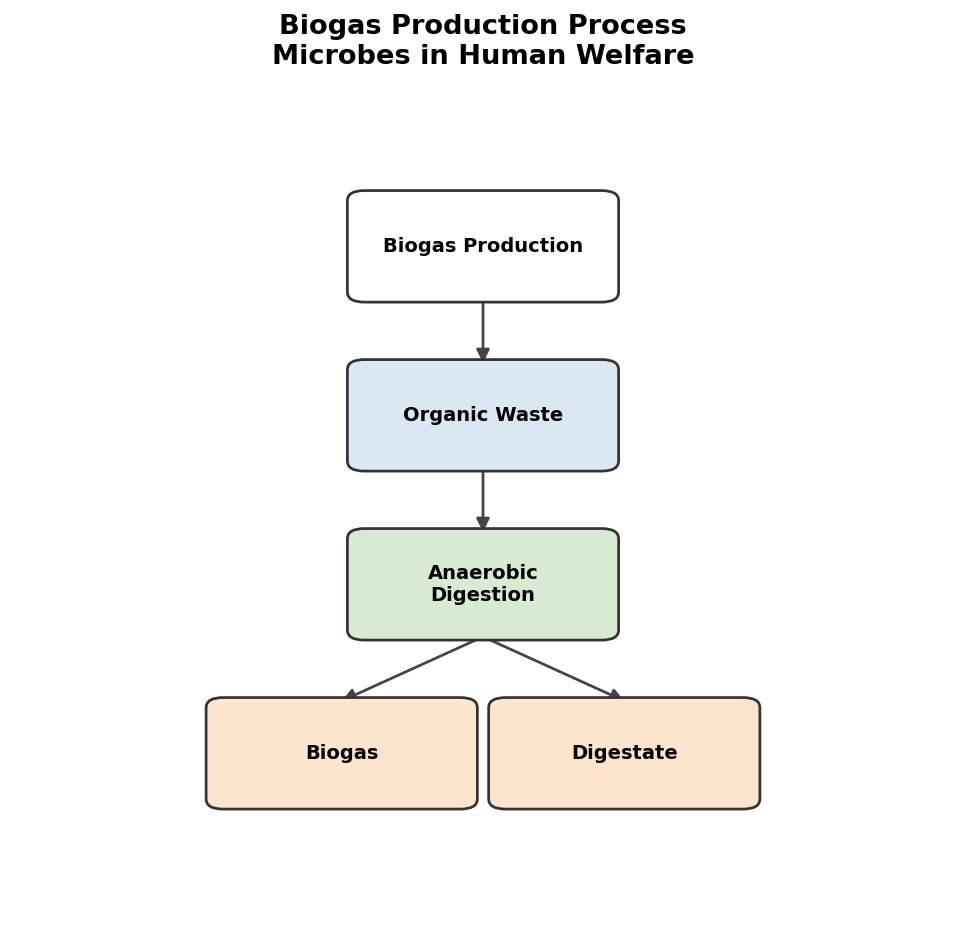
Based on the given flowchart, answer the following:
What is the initial input in the biogas production process?
AOrganic Waste
BBiogas
CAnaerobic Digestion
DDigestate
What is produced as a by-product of anaerobic digestion?
Which process is responsible for converting organic waste into biogas?
AAerobic Digestion
BAnaerobic Digestion
CFermentation
DComposting
What is the first step in the production of bio-fertilizers?
ANutrient Release
BMicrobial Cultures
CSoil Enrichment
DNone of the above
What is the final outcome of the bio-fertilizer production process?
What do microbial cultures contribute to in the process?
ASoil Erosion
BNutrient Release
CPlant Growth
DWater Retention
Show answersHide answers
1. Option 1 — Organic Waste
2. Digestate
3. Option 2 — Anaerobic Digestion
4. Option 2 — Microbial Cultures
5. Soil Enrichment
6. Option 2 — Nutrient Release
Q363 Marks
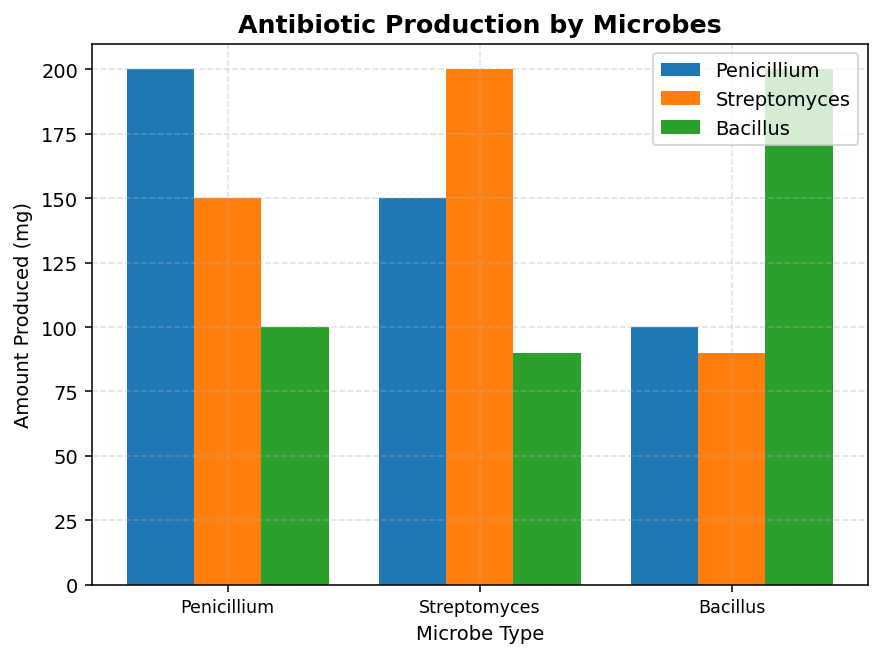
Based on the given chart, answer the following:
Which microbe produces the highest amount of antibiotics?
APenicillium
BStreptomyces
CBacillus
DNone of the above
What is the amount of antibiotics produced by Streptomyces?
Which microbe has the lowest antibiotic production?
APenicillium
BStreptomyces
CBacillus
DNone of the above
Show answersHide answers
1. Option 1 — Penicillium
2. 200 mg
3. Option 3 — Bacillus
Q373 Marks
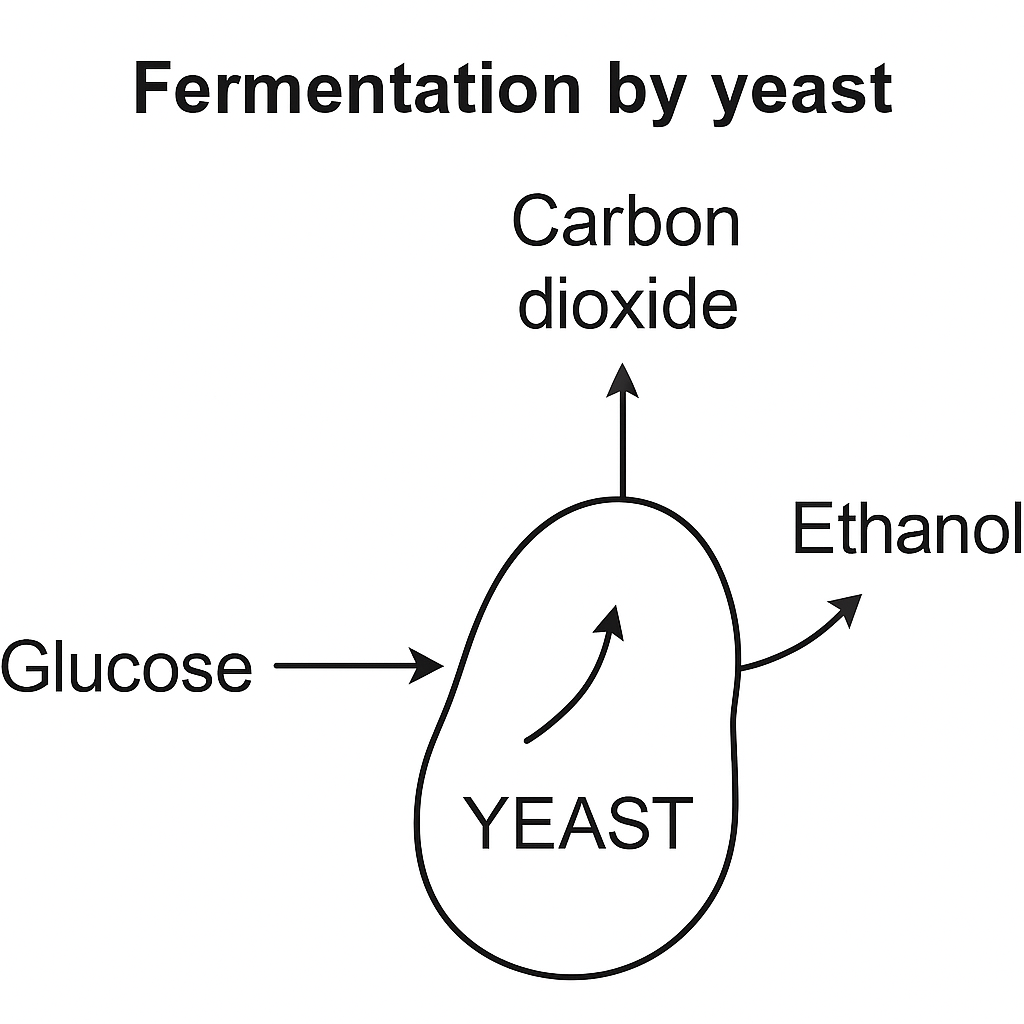
Based on the given diagram of microbial fermentation, answer the following:
What is the primary input for the fermentation process shown?
AEthanol
BGlucose
CCarbon Dioxide
DOxygen
Which product is NOT a result of fermentation?
AEthanol
BCarbon Dioxide
CGlucose
DNone of the above
What type of microbe is primarily involved in the fermentation process depicted?
Show answersHide answers
1. Option 2 — Glucose
2. Option 3 — Glucose
3. Yeast
Q383 Marks
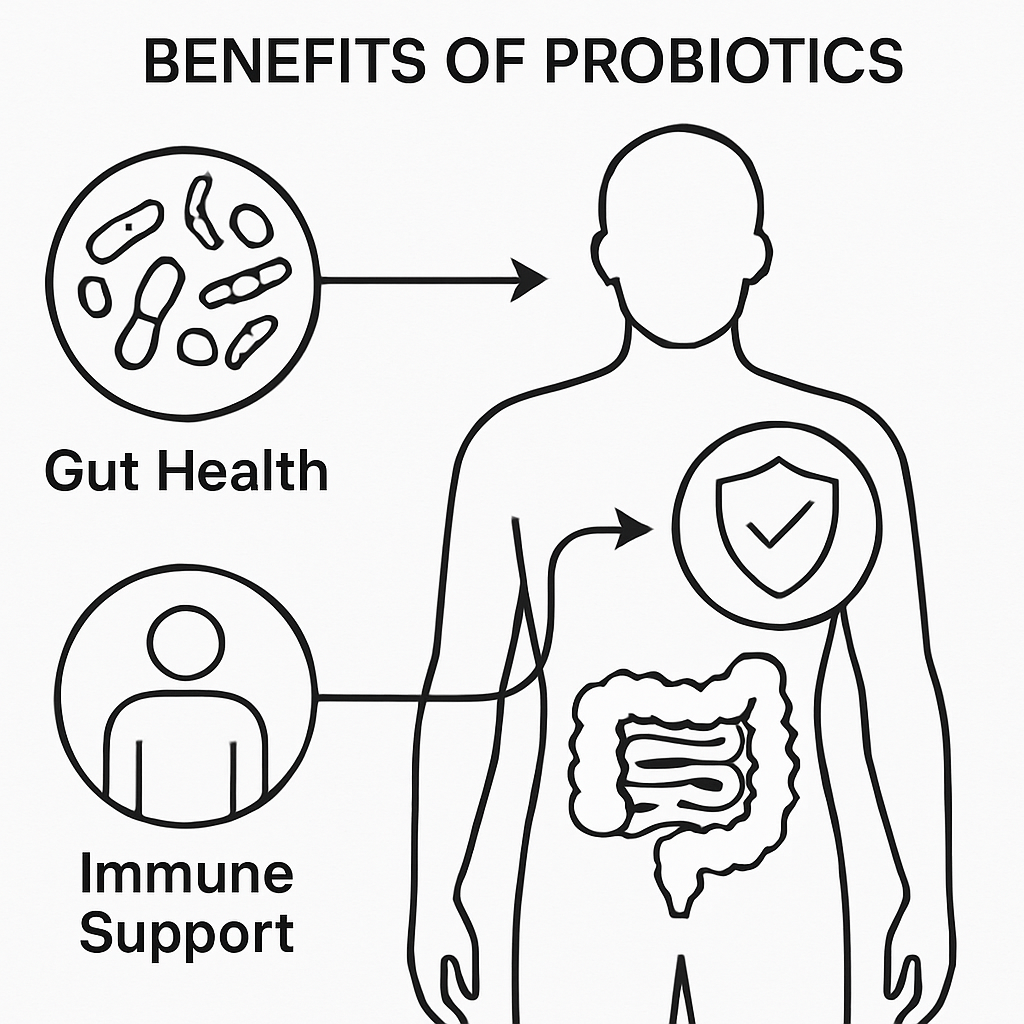
Based on the given diagram of probiotics, answer the following:
What is one of the primary benefits of probiotics shown in the diagram?
AIncreased Blood Pressure
BGut Health
CWeight Gain
DNone of the above
Which system in the body do probiotics primarily support?
Probiotics are beneficial for which aspect of health?