SUMMARY: This chapter focuses on the concepts of health and disease, exploring the causes, prevention, and treatment of various human diseases. KEY TOPICS: Health and its failure, infectious diseases, immunity, AIDS, cancer, drugs and alcohol abuse, prevention and control of diseases, vaccination, lifestyle diseases.
Correct answer: Option 1 —
Both statements are true.
Case Study / Passage Questions4 questions
Q273 Marks
A 30-year-old man returns from a forested area with high fever, chills and sweating that recur every 48 hours. A blood smear shows ring-shaped Plasmodium parasites in his RBCs. The doctor diagnoses tertian malaria caused by Plasmodium vivax and prescribes chloroquine.
The causative agent of malaria is a:
ABacterium
BVirus
CProtozoan
DHelminth
The vector that transmits Plasmodium is:
AFemale Anopheles
BMale Anopheles
CFemale Aedes
DCulex
Discuss the cause, transmission, symptoms and prevention of malaria.
Show answersHide answers
1. Option 3 — Protozoan
2. Option 1 — Female Anopheles
3. Malaria is caused by Plasmodium species (P. vivax, P. malariae, P. falciparum, P. ovale) and is transmitted by the bite of a female Anopheles mosquito. Sporozoites enter the liver and multiply, then invade RBCs causing periodic fever, chills and anaemia. Diagnosis is by blood smear or rapid antigen test. Treatment uses chloroquine or artemisinin combinations. Prevention involves mosquito control, bed nets and chemoprophylaxis.
Q283 Marks
A young woman is found to be HIV positive on routine screening. The doctor explains that HIV is a retrovirus that targets CD4 helper T cells weakening the immune system. She is started on antiretroviral therapy (ART) which suppresses viral replication and prolongs life.
HIV is a:
ARetrovirus
BDNA virus
CBacterium
DProtozoan
HIV primarily infects:
ACytotoxic T cells
BHelper T cells (CD4)
CB cells
DMacrophages
Discuss the cause, transmission, pathology and treatment of HIV/AIDS.
Show answersHide answers
1. Option 1 — Retrovirus
2. Option 2 — Helper T cells (CD4)
3. HIV (Human Immunodeficiency Virus) is a retrovirus that uses reverse transcriptase to copy its RNA genome into DNA which integrates into the host chromosome. HIV targets CD4 helper T cells. Over years the CD4 count falls and the patient becomes susceptible to opportunistic infections — a stage called AIDS. Transmission occurs through unprotected sex, blood transfusion, contaminated needles and mother-to-child during pregnancy and breastfeeding. ART suppresses viral replication but does not cure HIV.
Q293 Marks
Vaccination is a crucial public health strategy that helps in preventing infectious diseases. It involves the administration of a vaccine to stimulate the immune system to recognize and fight pathogens. Vaccines can be made from weakened or killed forms of the pathogen, or from its toxins. The introduction of vaccines has led to the eradication of diseases such as smallpox and has significantly reduced the incidence of polio and measles. Despite their effectiveness, vaccine hesitancy remains a challenge, influenced by misinformation and mistrust in healthcare systems.
What is the primary purpose of vaccination?
ATo cure diseases
BTo stimulate the immune system
CTo provide immediate relief
DTo replace medications
Name one disease that has been eradicated due to vaccination.
Which factor contributes to vaccine hesitancy?
AIncreased awareness
BMisinformation
CGovernment support
DScientific research
Show answersHide answers
1. Option 2 — To stimulate the immune system
2. Smallpox
3. Option 2 — Misinformation
Q303 Marks
AIDS, caused by the Human Immunodeficiency Virus (HIV), is a condition that severely weakens the immune system, making the body vulnerable to opportunistic infections and certain cancers. The virus primarily spreads through unprotected sexual contact, sharing of needles, and from mother to child during childbirth or breastfeeding. Antiretroviral therapy (ART) has been a significant advancement in managing HIV, allowing individuals to lead healthier lives and reducing the risk of transmission. Education and awareness are vital in combating the stigma associated with AIDS.
What does ART stand for in the context of HIV treatment?
AAntiretroviral therapy
BAntibiotic treatment
CAntiviral response
DAntigen replacement therapy
List one method through which HIV can be transmitted.
Why is education important in the context of AIDS?
Show answersHide answers
1. Option 1 — Antiretroviral therapy
2. Unprotected sexual contact
3. To combat stigma and promote awareness
Table-Based Questions4 questions
Q313 Marks
Study the table on common diseases and their causative agents:
Disease
Causative agent
Mode of transmission
Tuberculosis
Mycobacterium tuberculosis
Air
Typhoid
Salmonella typhi
Contaminated food/water
Pneumonia
Streptococcus / Haemophilus
Air
Malaria
Plasmodium
Anopheles mosquito
Filariasis
Wuchereria
Culex mosquito
Ringworm
Microsporum / Trichophyton
Direct contact
Ringworm is caused by:
ABacteria
BVirus
CFungi
DProtozoan
Filariasis is transmitted by:
AAnopheles
BAedes
CCulex
DSandfly
Classify the diseases listed in the table on the basis of their causative agents and modes of transmission.
Show answersHide answers
1. Option 3 — Fungi
2. Option 3 — Culex
3. Human diseases are caused by various pathogens — bacteria, viruses, fungi, protozoans and helminths — that may be transmitted directly (by contact, droplets) or indirectly (by vectors, contaminated food and water). Personal hygiene, vaccination, vector control and prompt treatment are essential public health measures. Knowledge of the pathogen and its mode of transmission is crucial for prevention and control.
Q326 Marks
Identify the causative agent and mode of transmission for each common human disease.
Disease
Causative agent
Mode of transmission
Tuberculosis
?
?
Typhoid
?
?
Malaria
?
?
Filariasis
?
?
Ringworm
?
?
AIDS
?
?
Q336 Marks
Which disease has the highest mortality rate according to the table?
Disease
Causative Agent
Mortality Rate (%)
Tuberculosis
Mycobacterium tuberculosis
15
AIDS
HIV
50
Cancer
Various
30
Q342 Marks
Study the following data and answer the questions below:
Disease
Transmission Mode
Preventive Measures
Malaria
Mosquito bite
Use of mosquito nets
HIV/AIDS
Sexual contact
Safe sex practices
Influenza
Airborne droplets
Vaccination
What is the transmission mode of Malaria?
Which disease can be prevented through vaccination?
Show answersHide answers
1.
2.
Picture-Based Questions4 questions
Q352 Marks
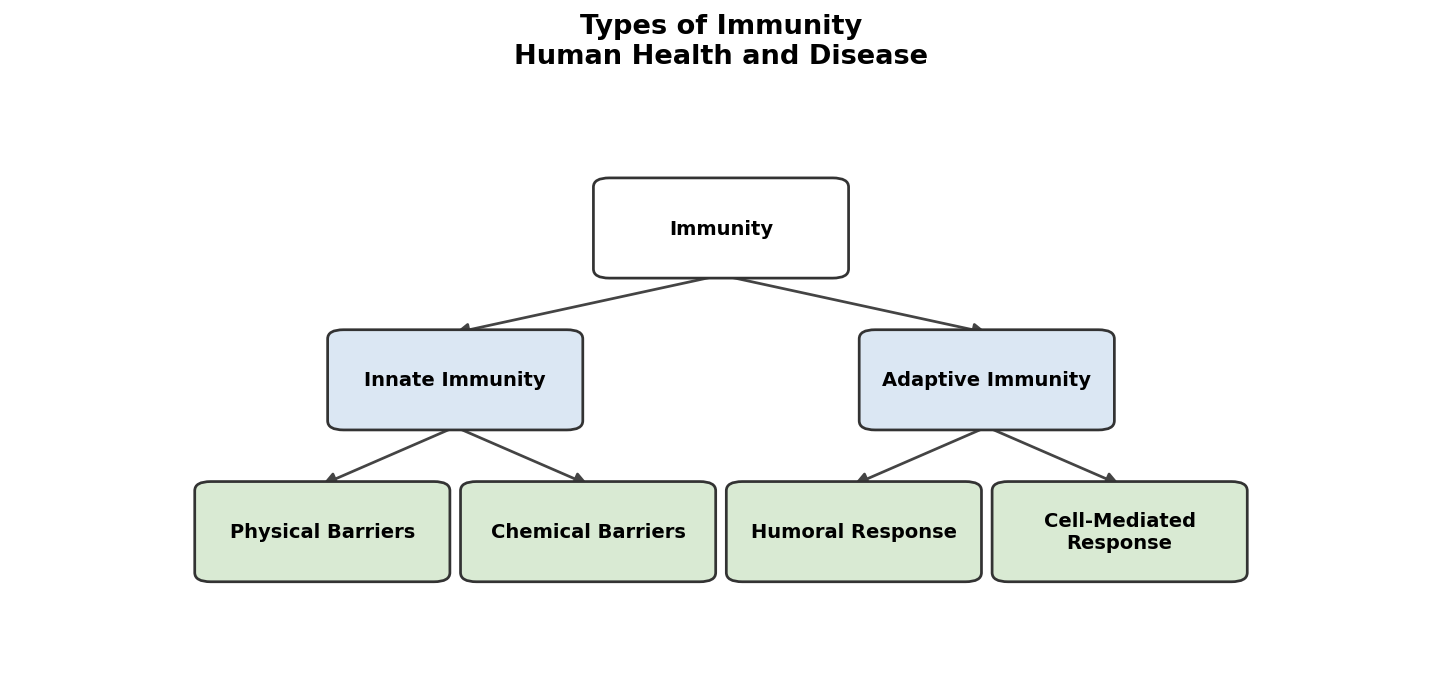
Based on the given flowchart, answer the following:
What type of immunity is characterized by physical and chemical barriers?
AAdaptive Immunity
BInnate Immunity
CPassive Immunity
DActive Immunity
List two components of adaptive immunity.
What is the first stage of cancer development?
APromotion
BProgression
CInitiation
DMetastasis
Describe the process that occurs during the promotion stage.
Show answersHide answers
1. Option 2 — Innate Immunity
2. Humoral Response, Cell-Mediated Response
3. Option 3 — Initiation
4. Cell proliferation and tumor formation.
Q362 Marks
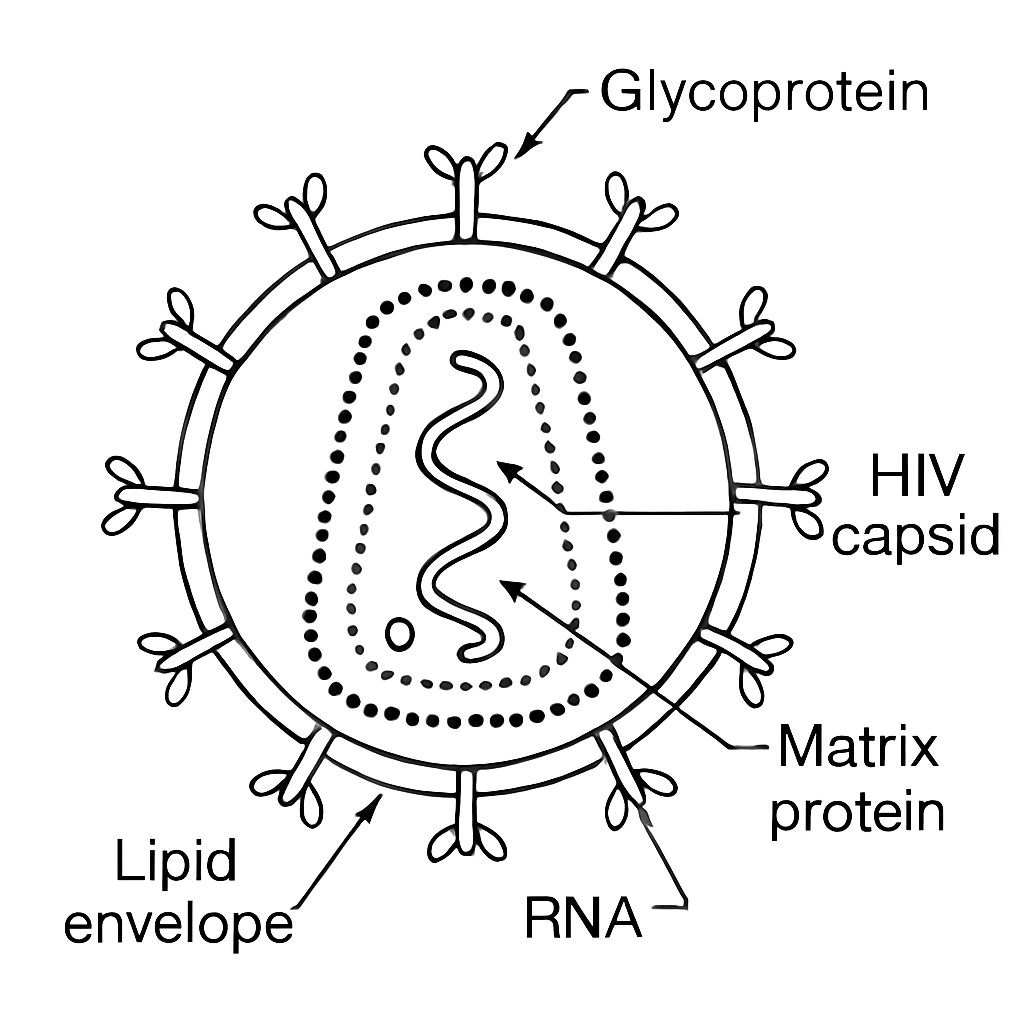
Based on the given diagram of the HIV virus, answer the following:
What is the role of the lipid envelope in the HIV virus?
Which component of the HIV virus is responsible for its genetic material?
AProteins
BRNA
CLipid Envelope
DEnzymes
Show answersHide answers
1. It helps the virus to enter host cells.
2. Option 2 — RNA
Q372 Marks
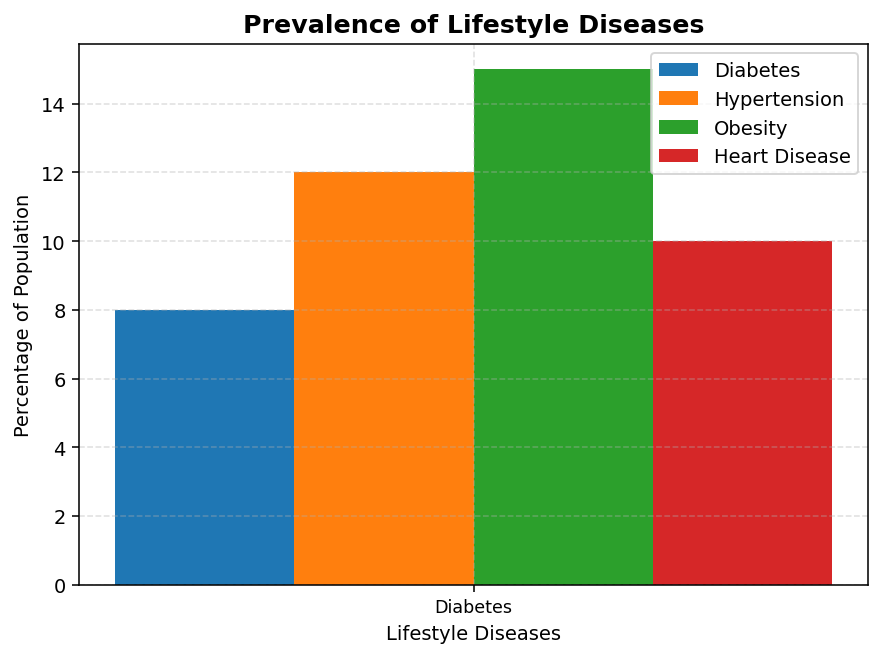
Based on the given chart, answer the following:
Which lifestyle disease has the highest prevalence according to the chart?
ADiabetes
BHypertension
CObesity
DHeart Disease
What percentage of the population is affected by Hypertension?
Show answersHide answers
1. Option 3 — Obesity
2. 12%
Q382 Marks
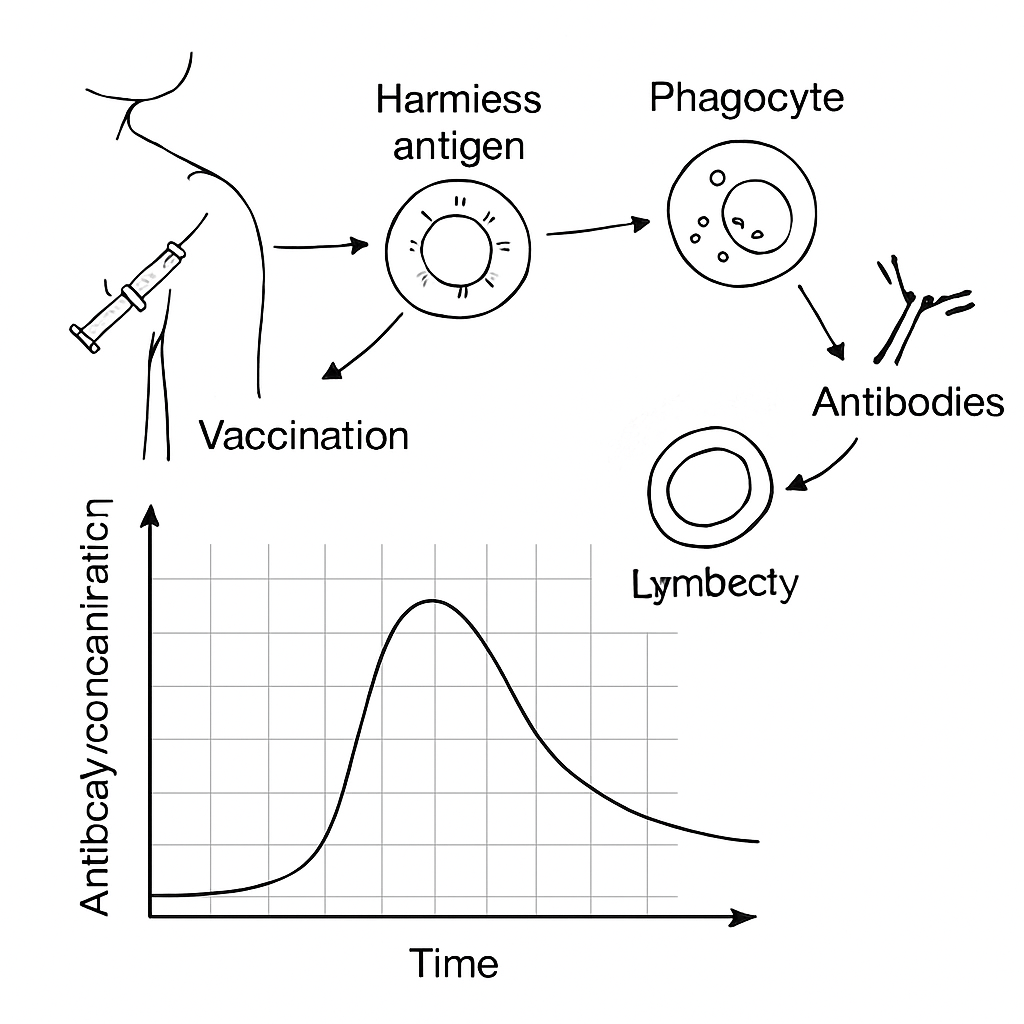
Based on the given diagram of vaccination, answer the following:
What is the primary purpose of vaccination?
ATo cure diseases
BTo prevent diseases
CTo treat symptoms
DTo enhance drug efficacy
Explain how vaccination leads to immunity.
Show answersHide answers
1. Option 2 — To prevent diseases
2. It stimulates the immune system to produce antibodies.