Sexual Reproduction in Flowering Plants — Important Questions
56 questions
With answersCBSE format
SUMMARY: This chapter explores the process of sexual reproduction in flowering plants, detailing the structure, function, and development of reproductive organs and mechanisms. KEY TOPICS: structure of flower, pollination, fertilization, development of male and female gametophytes, double fertilization, seed formation, fruit development, apomixis, polyembryony
The male gamete in flowering plants is produced by:
AAnther
BStigma
COvary
DStyle
Check answerHide answer
Correct answer: Option 1 — Anther
Q21 Mark
The transfer of pollen grains from anther to stigma is called:
AFertilisation
BPollination
CGermination
DReproduction
Check answerHide answer
Correct answer: Option 2 — Pollination
Q31 Mark
Pollination by wind is called:
AEntomophily
BAnemophily
CHydrophily
DOrnithophily
Check answerHide answer
Correct answer: Option 2 — Anemophily
Q41 Mark
The endosperm in angiosperms is:
AHaploid
BDiploid
CTriploid
DTetraploid
Check answerHide answer
Correct answer: Option 3 — Triploid
Q51 Mark
Apomixis is:
ASexual reproduction
BAsexual reproduction mimicking sexual
CVegetative reproduction
DPolyembryony
Check answerHide answer
Correct answer: Option 2 — Asexual reproduction mimicking sexual
Q61 Mark
What is the primary function of the stigma in a flower?
ATo produce pollen grains
BTo receive pollen grains
CTo support the flower structure
DTo attract pollinators
Check answerHide answer
Correct answer: Option 2 — To receive pollen grains
Q71 Mark
Which part of the flower develops into the fruit after fertilization?
AStamen
BOvary
CStyle
DSepal
Check answerHide answer
Correct answer: Option 2 — Ovary
Q81 Mark
In flowering plants, the process of double fertilization involves the fusion of how many gametes?
AOne
BTwo
CThree
DFour
Check answerHide answer
Correct answer: Option 2 — Two
Q91 Mark
What is the role of the ovule in flowering plants?
ATo produce nectar
BTo develop into seeds
CTo support the flower
DTo attract insects
Check answerHide answer
Correct answer: Option 2 — To develop into seeds
Q101 Mark
Which of the following is a characteristic of polyembryony?
AFormation of multiple seeds from one ovule
BDevelopment of multiple embryos from one fertilized egg
CProduction of seeds without fertilization
DFormation of seeds in different fruits
Check answerHide answer
Correct answer: Option 2 — Development of multiple embryos from one fertilized egg
Q111 Mark
What type of pollination occurs when pollen is transferred between flowers of the same plant?
ASelf-pollination
BCross-pollination
CWind pollination
DInsect pollination
Check answerHide answer
Correct answer: Option 1 — Self-pollination
Q121 Mark
Which structure is responsible for the production of female gametes in flowering plants?
AAnther
BOvary
CFilament
DStigma
Check answerHide answer
Correct answer: Option 2 — Ovary
Q131 Mark
What is the primary function of the endosperm in seeds?
ATo protect the seed
BTo provide nutrition to the developing embryo
CTo facilitate seed dispersal
DTo attract pollinators
Check answerHide answer
Correct answer: Option 2 — To provide nutrition to the developing embryo
Q141 Mark
Which of the following terms describes the development of seeds without fertilization?
AApomixis
BPolyembryony
CGermination
DFertilization
Check answerHide answer
Correct answer: Option 1 — Apomixis
Q151 Mark
Which part of the flower is typically involved in attracting pollinators?
AStamen
BPetals
CSepals
DOvary
Check answerHide answer
Correct answer: Option 2 — Petals
Short Answer Questions10 questions
Q163 Marks
Differentiate between self-pollination and cross-pollination.
Q173 Marks
What is double fertilisation? Why is it called so?
Q183 Marks
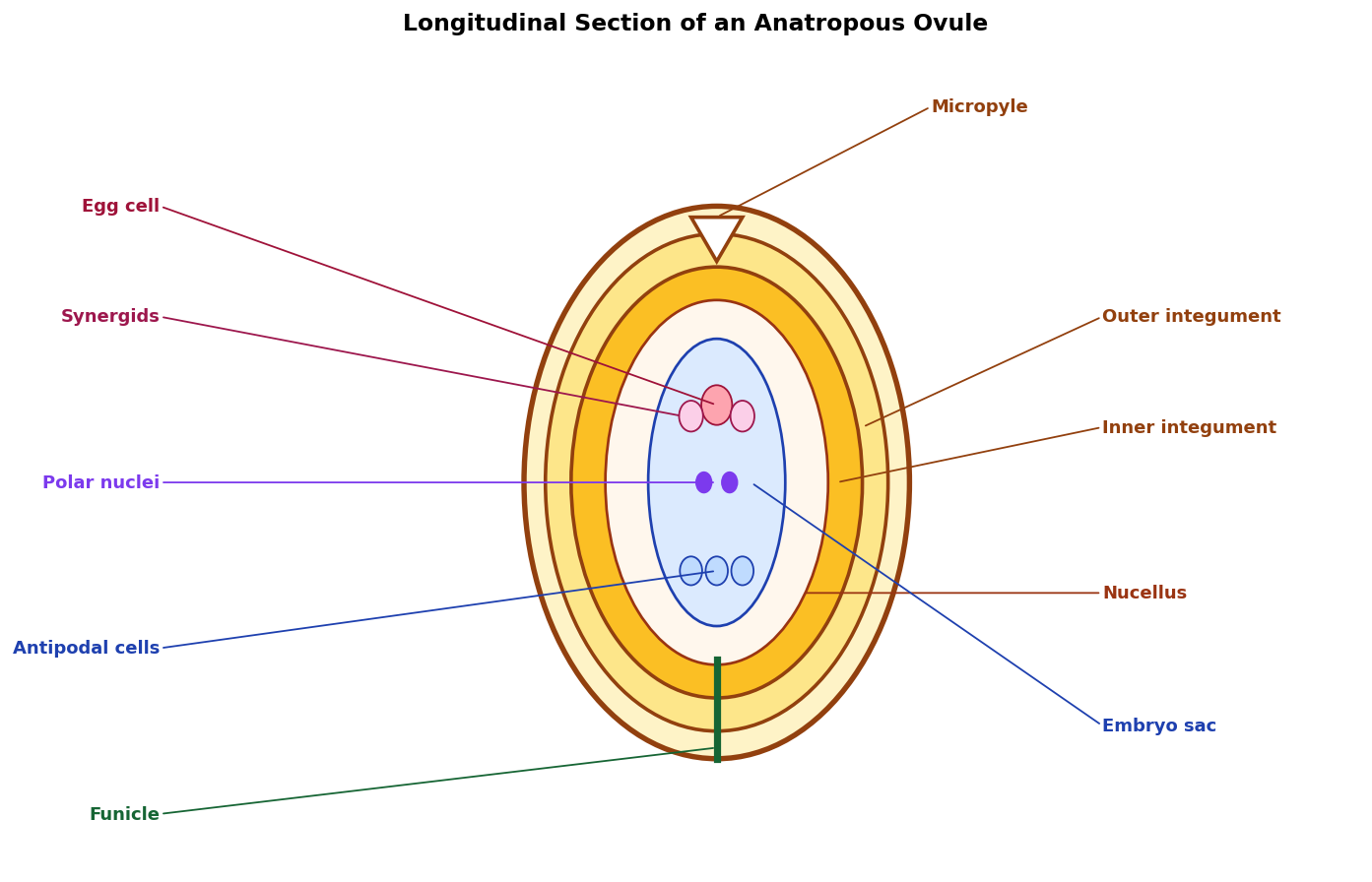
Describe the structure of an anatropous ovule.
Q193 Marks
What is polyembryony? Give one example.
Q203 Marks
Distinguish between perisperm and endosperm.
Q213 Marks
What are the main parts of a flower involved in reproduction?
View sample solutionHide solution
The main parts of a flower involved in reproduction are the stamen (male reproductive organ), which consists of the anther and filament, and the pistil (female reproductive organ), which includes the stigma, style, and ovary.
Q223 Marks
Explain the process of pollination and its significance in flowering plants.
View sample solutionHide solution
Pollination is the transfer of pollen grains from the anther to the stigma of a flower. It is significant because it enables fertilization to occur, leading to the formation of seeds and fruit, which are essential for plant reproduction and genetic diversity.
Q233 Marks
What is the role of the ovule in flowering plants?
View sample solutionHide solution
The ovule is the structure within the ovary that develops into a seed after fertilization. It contains the female gametophyte, which produces the egg cell that, when fertilized by the male gamete, leads to seed formation.
Q243 Marks
Describe the process of fertilization in flowering plants.
View sample solutionHide solution
Fertilization in flowering plants occurs when a male gamete (sperm) fuses with a female gamete (egg) within the ovule. This process results in the formation of a zygote, which eventually develops into an embryo within the seed.
Q253 Marks
What is apomixis and how does it differ from sexual reproduction?
View sample solutionHide solution
Apomixis is a form of asexual reproduction that occurs in some flowering plants where seeds are produced without fertilization. Unlike sexual reproduction, apomixis does not involve the fusion of male and female gametes, leading to offspring that are genetically identical to the parent plant.
Long Answer Questions6 questions
Q266 Marks
Describe the structure of a typical anatropous ovule with a labelled diagram.
Q276 Marks
Explain the development of male gametophyte in angiosperms.
Q286 Marks
Describe the formation of female gametophyte (embryo sac) in angiosperms.
Q296 Marks
Explain double fertilisation and its significance with a diagram.
Q306 Marks
Describe the post-fertilisation events leading to seed and fruit formation.
Q316 Marks
Differentiate between autogamy and xenogamy in tabular form with examples.
Assertion–Reason Questions8 questions
Q321 Mark
Assertion (A): Pollen grains have a hard outer coat called exine.
Reason (R): Exine is composed of sporopollenin which is highly resistant.
Show explanationHide explanation
Correct answer: Option 1 —
Both A and R are true, and R is the correct explanation of A.
Statement 2: It occurs without fertilisation of the ovule.
Show answerHide answer
Correct answer: Option 1 —
Both statements are true.
Case Study / Passage Questions4 questions
Q453 Marks
A botanist studies sunflower fields where honey bees are the chief pollinators. She notes that the flowers are bright yellow with sweet nectar at the base of the petals. The bees collect nectar and pollen and as they move from flower to flower they transfer pollen from one anther to a stigma effecting cross-pollination.
Pollination by insects is called:
AAnemophily
BHydrophily
CEntomophily
DOrnithophily
The adaptation of sunflower for entomophily is:
ABright colour and nectar
BLightweight pollen
CLong stigmas
DReduced perianth
Compare the adaptations of insect-pollinated and wind-pollinated flowers.
Show answersHide answers
1. Option 3 — Entomophily
2. Option 1 — Bright colour and nectar
3. Insect-pollinated flowers are usually large, brightly coloured, fragrant and rich in nectar to attract pollinators. Their pollen is sticky or spiny so that it adheres to the insect body. Wind-pollinated flowers in contrast are dull, small and produce large quantities of light dry pollen with feathery stigmas. Each adaptation is shaped by the needs of the pollinating agent.
Q463 Marks
A student examines a stained section of a developing seed and identifies a 7-celled 8-nucleate embryo sac. After fertilisation she observes a diploid zygote and a triploid endosperm nucleus. The teacher explains the unique double fertilisation of angiosperms involving syngamy and triple fusion.
The endosperm of an angiosperm is:
An
B2n
C3n
D4n
Triple fusion involves:
AEgg + 2 polar nuclei
BEgg + male gamete
CTwo polar nuclei + male gamete
DSynergid + male gamete
Explain double fertilisation and its biological significance in angiosperms.
Show answersHide answers
1. Option 3 — 3n
2. Option 3 — Two polar nuclei + male gamete
3. In double fertilisation one male gamete fuses with the egg cell to form a diploid zygote (syngamy). The second male gamete fuses with the two polar nuclei of the central cell forming a triploid primary endosperm nucleus (triple fusion). The endosperm provides nourishment to the developing embryo. Double fertilisation ensures that food storage tissue is laid down only when the embryo is formed.
Q473 Marks
In flowering plants, the process of sexual reproduction begins with the formation of flowers, which are the reproductive structures. Each flower typically contains both male and female reproductive organs. The male part, known as the stamen, produces pollen grains that contain the male gametes. The female part, called the pistil, houses the ovary, which contains ovules. Pollination occurs when pollen grains are transferred from the anther of the stamen to the stigma of the pistil. This can happen through various agents such as wind, water, or animals. Once pollination is successful, fertilization occurs, leading to the formation of a diploid zygote, which eventually develops into a seed. The surrounding ovary then matures into a fruit, aiding in seed dispersal.
What is the role of the stamen in flowering plants?
ATo produce seeds
BTo produce pollen grains
CTo attract pollinators
DTo form the fruit
Describe the process of fertilization in flowering plants.
Which part of the flower develops into the fruit?
AStamen
BPistil
CPetal
DSepal
Show answersHide answers
1. Option 2 — To produce pollen grains
2. Fertilization occurs when a male gamete from the pollen grain fuses with a female gamete in the ovule, resulting in the formation of a diploid zygote.
3. Option 2 — Pistil
Q483 Marks
The development of male and female gametophytes in flowering plants is a crucial aspect of sexual reproduction. The male gametophyte develops within the pollen grain, which is formed in the anthers of the stamen. Each pollen grain typically contains two sperm cells. Meanwhile, the female gametophyte, known as the embryo sac, develops within the ovule found in the ovary of the pistil. The embryo sac usually consists of seven cells, including one egg cell and two synergids that assist in fertilization. Upon successful pollination, the pollen grain germinates on the stigma, and the pollen tube grows down the style to reach the ovule, facilitating the delivery of sperm cells for fertilization.
What is contained within a pollen grain?
AOne egg cell
BTwo sperm cells
CSeven cells
DSynergids
Explain the structure of the female gametophyte in flowering plants.
What role do synergids play in the fertilization process?
AThey develop into seeds
BThey assist the pollen tube in reaching the egg cell
CThey produce pollen
DThey form the fruit
Show answersHide answers
1. Option 2 — Two sperm cells
2. The female gametophyte, or embryo sac, typically consists of seven cells: one egg cell, two synergids, three antipodal cells, and one central cell with two polar nuclei.
3. Option 2 — They assist the pollen tube in reaching the egg cell
Table-Based Questions4 questions
Q493 Marks
Study the table on different types of pollination and answer:
Type
Agent
Example
Autogamy
Same flower
Pea
Geitonogamy
Different flower of same plant
Maize
Xenogamy
Different plant
Mustard
Anemophily
Wind
Wheat
Hydrophily
Water
Vallisneria
Cross-pollination between two different plants is called:
AAutogamy
BGeitonogamy
CXenogamy
DCleistogamy
Vallisneria is pollinated by:
AWind
BWater
CBird
DInsect
Distinguish between geitonogamy and xenogamy and mention any two adaptations for each mode of pollination.
Show answersHide answers
1. Option 3 — Xenogamy
2. Option 2 — Water
3. Pollination is the transfer of pollen from anther to stigma. Self-pollination (autogamy) takes place within a single flower; geitonogamy is between two flowers of the same plant; xenogamy is between two different plants. Pollination may be brought about by abiotic agents (wind or water) or biotic agents (insects, birds, bats). Each mode is associated with characteristic floral adaptations.
Q506 Marks
Identify the agent and an example for each pollination type.
Type
Agent
Example
Autogamy
?
?
Geitonogamy
?
?
Xenogamy
?
?
Anemophily
?
?
Hydrophily
?
?
Entomophily
?
?
Q516 Marks
Identify the components of a typical Polygonum-type embryo sac and their ploidy.
Component
Number
Ploidy
Egg
1
?
Synergids
?
n
Antipodal cells
?
n
Polar nuclei (in central cell)
?
?
Q526 Marks
Which type of pollination is most common in plants with brightly colored flowers?
Pollination Type
Characteristics
Example
Self-pollination
Pollen transfers within the same flower
Pea plants
Cross-pollination
Pollen transfers between different flowers
Butterflies and bees
Wind pollination
Pollen carried by wind
Corn
Picture-Based Questions4 questions
Q533 Marks
Study the L.S. of an anatropous ovule and answer:
The opening through which the pollen tube enters the ovule is the:
AFunicle
BMicropyle
CChalaza
DHilum
A typical Polygonum-type embryo sac is:
A3-celled 8-nucleate
B7-celled 8-nucleate
C8-celled 7-nucleate
D5-celled 8-nucleate
Describe the structure of an anatropous ovule and identify the parts of the embryo sac.
Show answersHide answers
1. Option None
2. Option None
3. An anatropous ovule has its body inverted so the micropyle and chalaza lie at the same end. The ovule is attached to the placenta by a stalk called the funicle. The body has two integuments enclosing the nucellus which contains the embryo sac. The Polygonum-type embryo sac is 7-celled and 8-nucleate - three antipodals one egg two synergids and two polar nuclei in the central cell.
Q543 Marks
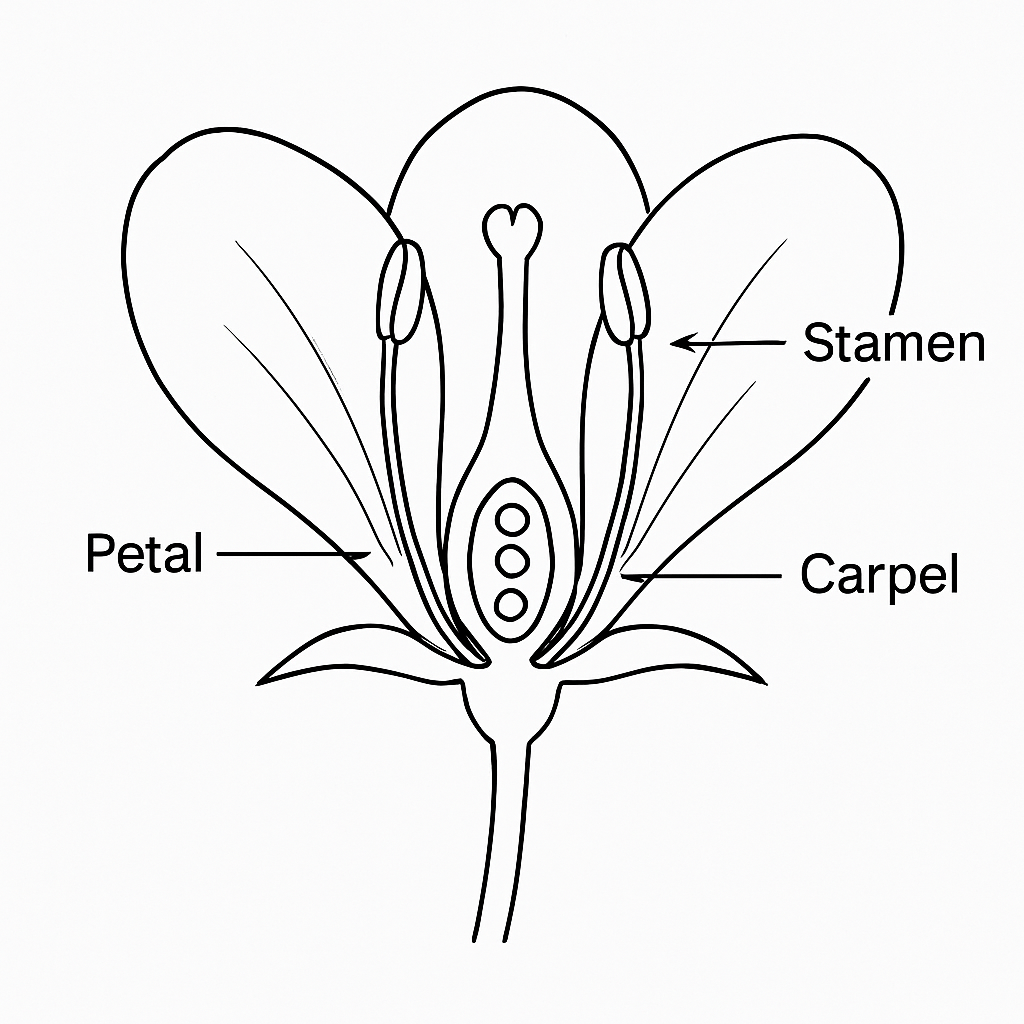
Based on the given diagram of the structure of a flower, answer the following:
What is the function of the petals in a flower?
Which part of the flower is responsible for producing pollen?
ACarpel
BStamen
CPetal
DSepal
Identify the female reproductive part of the flower.
AStamen
BCarpel
CPetal
DSepal
Show answersHide answers
1. To attract pollinators
2. Option 2 — Stamen
3. Option 2 — Carpel
Q553 Marks
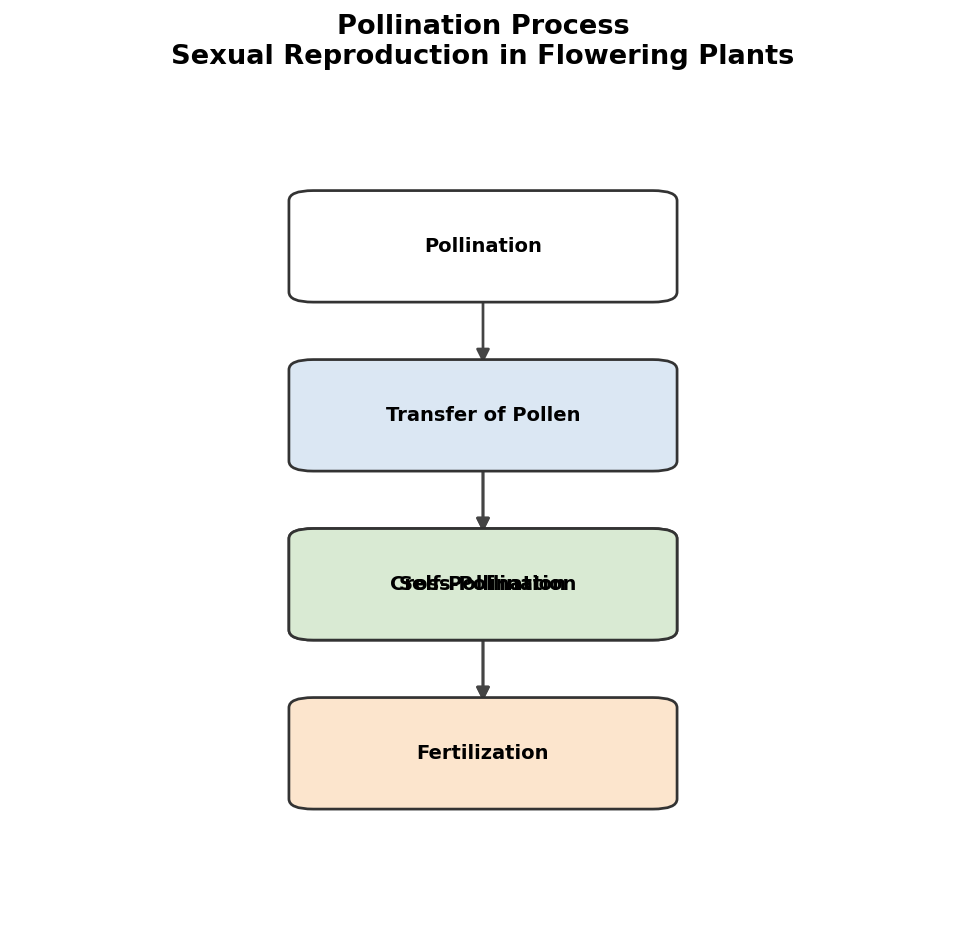
Based on the given flowchart of the pollination process, answer the following:
What are the two types of pollination mentioned in the flowchart?
ASelf-Pollination and Cross-Pollination
BFertilization and Seed Formation
CPollen Transfer and Seed Development
DNone of the above
What is the final step in the pollination process as shown in the flowchart?
ASeed Formation
BFertilization
CPollen Transfer
DCross-Pollination
Explain the significance of cross-pollination.
Show answersHide answers
1. Option 1 — Self-Pollination and Cross-Pollination
2. Option 2 — Fertilization
3. It increases genetic diversity in plants.
Q563 Marks
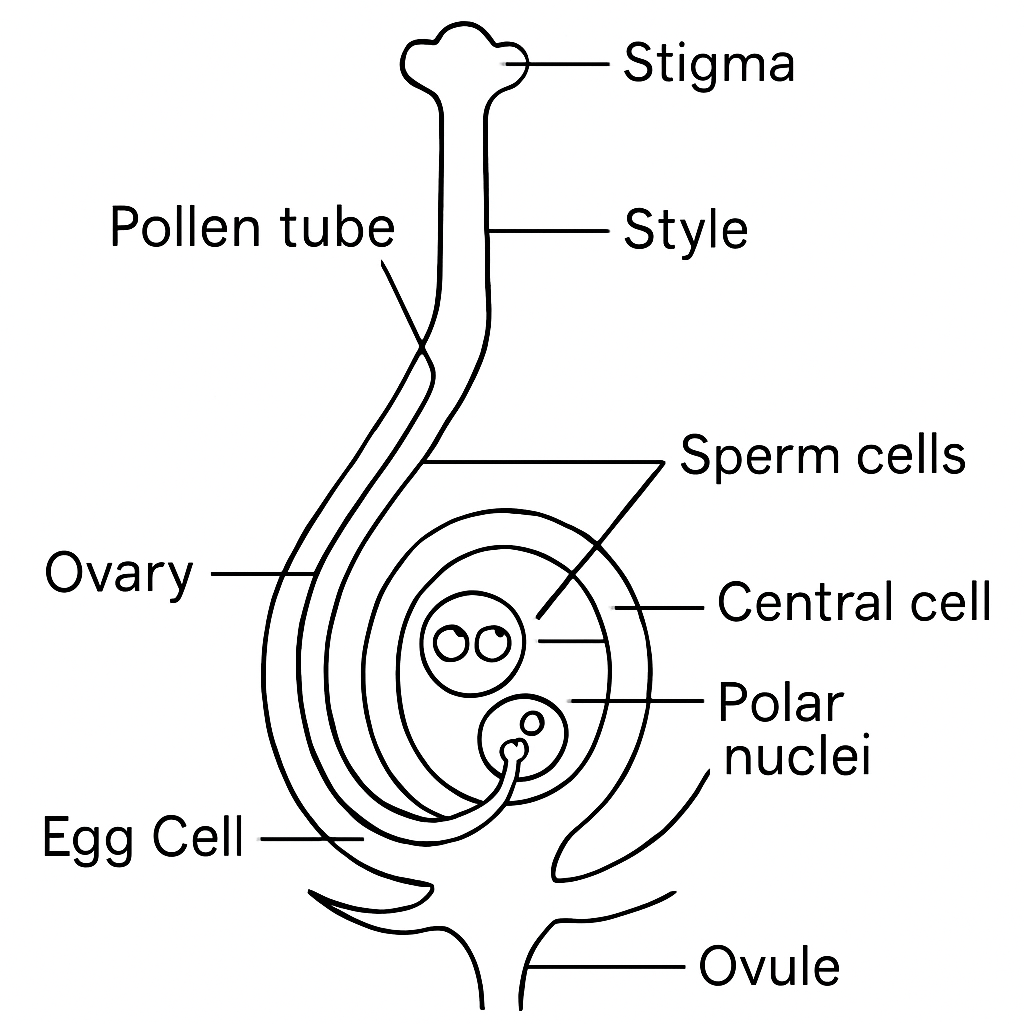
Based on the given diagram of double fertilization, answer the following:
What are the two fertilization events that occur during double fertilization?
AFormation of zygote and endosperm
BFormation of pollen and ovule
CFormation of seed and fruit
DNone of the above
Identify the structure that develops into the endosperm.
AZygote
BSperm Cell
CPolar Nuclei
DEgg Cell
Describe the role of the zygote in plant development.